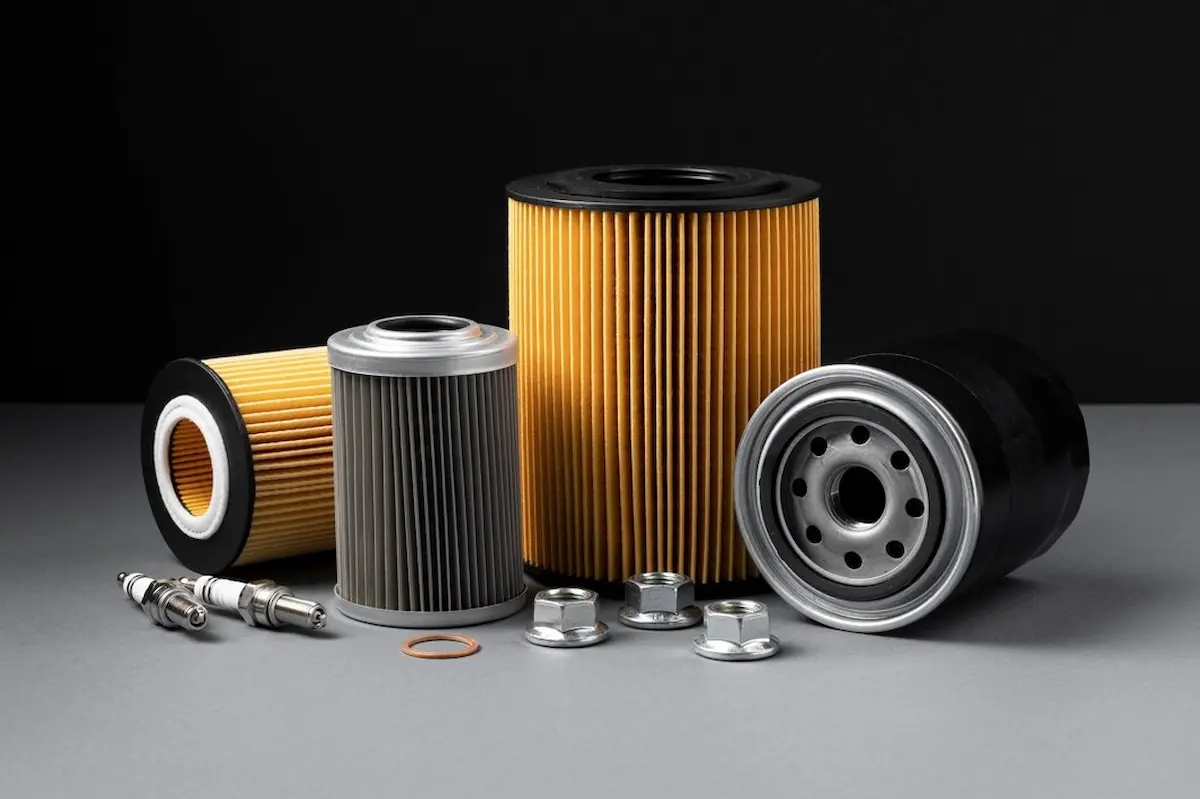
Your car’s fuel filter plays a critical role in keeping your engine healthy. It prevents dirt, rust, and other debris from entering the fuel system. But like any other component, the fuel filter doesn’t last forever. Over time, it can become clogged, restricting the flow of fuel and causing serious performance issues.
Why Is the Fuel Filter Important?
Fuel injectors and engines are designed to work with clean fuel. Even small particles can damage these sensitive parts. The fuel filter acts as a protective barrier, catching impurities before they reach the engine.
When the filter is clogged, the fuel supply becomes restricted, which leads to:
- Poor engine performance
- Increased strain on the fuel pump
- Reduced fuel efficiency
- Potential long-term engine damage
Common Symptoms of a Clogged Fuel Filter
Here are the telltale signs that your fuel filter may be clogged and needs replacement:
1. Difficulty Starting the Engine
If your car cranks but struggles to start, it may be due to insufficient fuel reaching the engine. A clogged filter can make cold starts especially difficult.
2. Engine Misfires or Hesitation
An inconsistent fuel supply can cause the engine to misfire, hesitate during acceleration, or even stall unexpectedly.
3. Loss of Power When Driving Uphill
If your vehicle struggles to maintain speed on hills or under heavy load, the restricted fuel flow from a dirty filter may be the culprit.
4. Decreased Fuel Efficiency
A clogged filter makes the fuel pump work harder, which can reduce overall fuel economy.
5. Frequent Stalling
Random stalling, especially at low speeds, is a major red flag that fuel isn’t flowing properly.
6. Check Engine Light
In some modern vehicles, the check engine light may illuminate if the fuel system detects pressure irregularities caused by a blocked filter.
When Should You Replace Your Fuel Filter?
The replacement interval varies depending on your car’s make, model, and driving conditions. As a general rule:
- Every 20,000–40,000 miles (32,000–64,000 km) for older vehicles with replaceable filters
- Every 60,000–100,000 miles (96,000–160,000 km) for newer vehicles with in-tank filters
If you drive in dusty conditions or use lower-quality fuel, you may need more frequent replacements.
Can You Drive With a Clogged Fuel Filter?
Technically, yes—but it’s risky. A clogged filter restricts fuel flow, strains the fuel pump, and may leave you stranded if it fails completely. Replacing the filter is a relatively inexpensive maintenance step compared to major engine or fuel pump repairs.
Final Thoughts
Your fuel filter might be small, but it plays a big role in keeping your car running smoothly. If you notice symptoms like hard starts, misfires, poor acceleration, or frequent stalling, don’t ignore them—your fuel filter could be the issue.
Regular replacement ensures your engine gets clean fuel, protects critical components, and keeps your vehicle performing at its best.